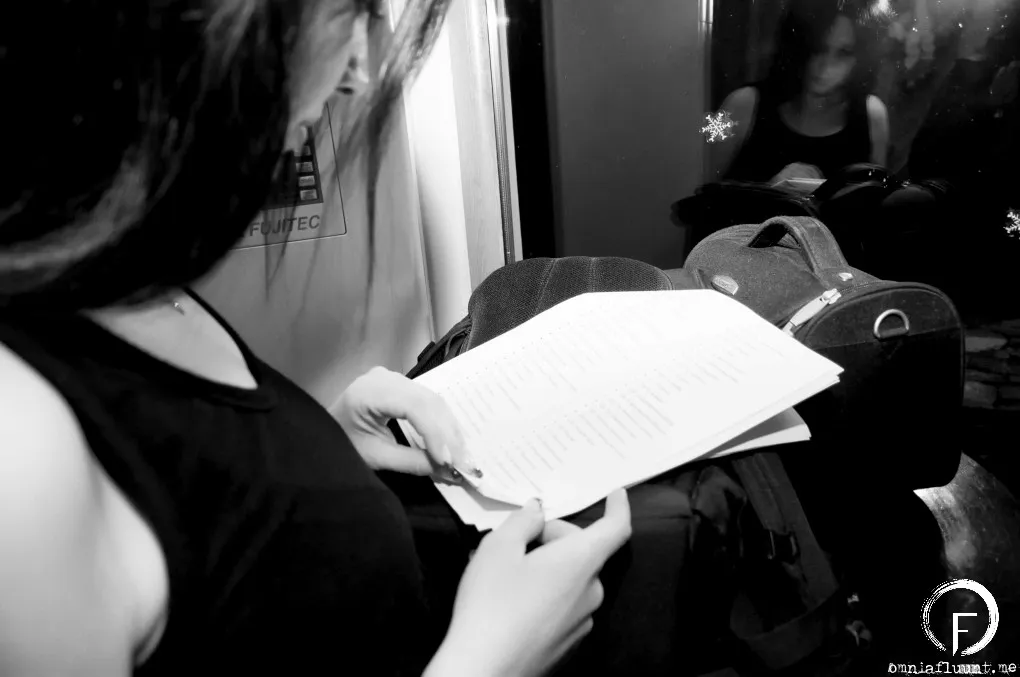
Everything passes through the image
Omnia Fluunt is not a category of photography.
It is a way of standing before the world.
A way of receiving what passes: light on a wall, a face half-turned, a table after use, a child’s gesture, a window, a shadow, a silence left behind by someone who has already gone. The image is not asked to explain. It is allowed to remain partial, wounded, unfinished.
Photography, here, is less a hunt than a form of attention. It does not seek to possess the world, but to accompany its vanishing. What matters is not the perfect frame, nor the polished surface, but the tremor of presence before it disappears. Black and white becomes a form of restraint. It removes the easy seduction of colour and leaves the image to breathe through contrast, grain, shadow, skin, stone, glass, light. It allows the ordinary to become severe; the accidental to become tender; the fragment to carry more truth than a complete account.
There are photographers who have taught us that the image need not be polite in order to be true. Daido Moriyama’s darkness, Garry Winogrand’s unresolved abundance, Tatsuo Suzuki’s fierce nearness — each, in a different way, reminds us that photography begins where certainty fails. The world is not composed for us. It spills, resists, flashes, withdraws.
Omnia Fluunt belongs to that restless silence.
It is an invitation to look without enclosing.
To come close without conquering.
To accept blur, interruption, hardness, tenderness.
To let the image remain open.
For every photograph is already a farewell.
A small resistance against forgetting.
A brief shelter for what cannot stay.
Everything flows.
Everything passes.
And sometimes, for the fraction of a second, something passes through the image and remains.